Losa Eguavoen
Totally Spies Walked So We Could Interface
Date
•
Time to Read
SHARE ARTICLE
In the early 2000s, the cartoon Totally Spies was a cultural staple. For many young girls, myself included, it theoretically defined what it meant to be a woman and a leader. Alongside Barbie, the rise of female Power Rangers, and the pop confidence of The Cheetah Girls, it fed a shared belief that we could be anything. Smart. Stylish. Globally curious. Unapologetically feminine. The message was clear: power could look like intelligence, ambition, and self-expression all at once.
Girl Power Beyond the Surface
At the time, girl power often felt more like a marketing tool than a real cultural shift. What made Totally Spies different was that it didn’t just place girls in typically male roles. It celebrated what made being a girl unique. The gadgets were disguised as compacts and lipsticks. The villains tapped into insecurities girls genuinely faced. Femininity wasn’t portrayed as something to overcome; it was the secret weapon. Characters like Sharpay Evans from High School Musical embodied a similar spirit: unapologetically feminine, ambitious, and misunderstood, reminding us that pink, glitter, and high standards can coexist with power.
As referenced in Understanding Literacy in Our Lives (Cleveland State University, 2022), girl power was often a corporate strategy designed to sell products to girls looking for more representation. It gave the illusion of change saying, “Look, girls are doing boy things now!” without addressing the deeper inequalities. True equity means meeting girls where they are and acknowledging their distinct experiences and needs.
Still, Totally Spies managed to rise above the surface-level empowerment. Through its characters’ intelligence, independence, and teamwork, it made a case for femininity being powerful in its own right.
Today, we’re seeing a return to that celebration of girlhood. Trends like just a girl and the coquette aesthetic reclaim what it means to be soft, stylish, and feminine and powerful. In many ways, it echoes Totally Spies’ legacy: making space for girlhood to be full of strength, curiosity, and self-expression.
These trends, rooted in nostalgia and reimagined for now, draw inspiration from early 2000s media and modern internet culture. Saying “just a girl” today isn’t about playing small, it’s about owning the things we were once told to minimize. Hobbies, styles, and emotions that were brushed off as “too girly” are being embraced again as valid forms of identity and creativity.
On platforms like TikTok and Instagram, people are sharing the small joys of girlhood, whether that’s revisiting childhood interests or dressing like their favorite early 2000s icons.
By reclaiming these moments, the just a girl movement flips the script. It says we don’t need to trade in our femininity to be taken seriously. We can be ambitious, bold, and fully ourselves at the same time.
Breaking Stereotypes with Intelligence
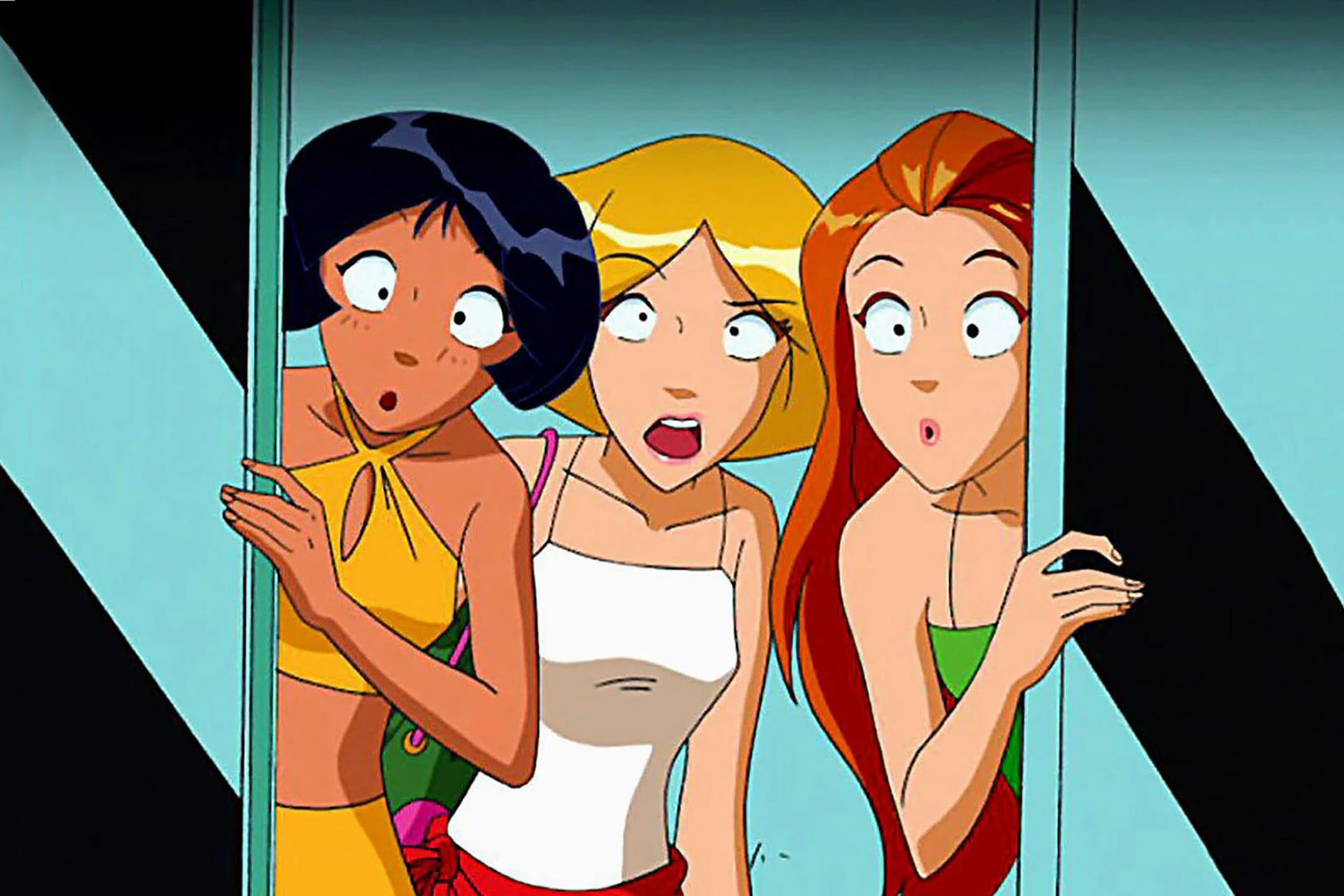
One of the most powerful things about Totally Spies was how it showed that being smart didn’t have to come at the expense of style or personality. Sam, the team’s leader and tech genius, wasn’t just the brains, she was also thoughtful, composed, and stylish. Her intelligence wasn’t downplayed to make her relatable. It was celebrated.
That was huge. So many of us grew up watching media where “the smart girl” was awkward, overlooked, or stripped of her femininity. Totally Spies flipped that. It showed us we could be all the things. Brilliant, fashionable, confident and still ourselves.
For me, moving into digital product design felt like the natural next chapter in a life spent loving both art and technology. I realized that my creativity and femininity aren’t distractions, they’re key to how I see the world and solve problems.
The Intersection of Art and Technology
The gadgets in Totally Spies were always cleverly disguised as beauty products. That mix of functionality and flair stuck with me. That idea of blending form and function is a core part of how I approach design now.
Whether I’m working on a product or crafting an experience, I always start with the story. I want it to feel meaningful, beautiful, and intentional, like it belongs in someone’s life, not just their screen.
Traveling the World, Expanding Horizons
The Totally Spies universe was never limited to their school or city. They were constantly jetting off to different parts of the world, taking us with them. Every episode introduced us to new environments, cultures, and perspectives. For me, that planted the seeds of curiosity early on.
At a time when international travel wasn’t as common or accessible as it is now, the show made the world feel expansive and within reach. It showed girls that they didn’t have to stay small or local. The world was theirs to explore.
That sense of global curiosity still drives my work. Whether I’m pulling inspiration from architecture, fashion, or cultural rituals, I try to infuse my design practice with that same spirit of openness and discovery.
Fashion as a Form of Empowerment
You can’t talk about Totally Spies without mentioning the fashion. Each character had her own distinct style: Clover’s bold trends, Alex’s sporty looks, Sam’s tailored polish. Their outfits truly reflected who they are.
What stood out was that fashion is not treated as a distraction or vanity project. It was a form of self-expression. These girls could take down villains in heels or hoodies, and it never made them any less capable.
That resonates with me deeply. It’s taught me that how we express ourselves can be an extension of our power, not a weakness. And that feeling still shows up today in the way we use style to communicate who we are.
The Impact of Girl Power
Looking back, Totally Spies gave us a glimpse into what was possible. It created a world where girls could be smart, stylish, adventurous, and strong. But it also highlighted the tension within movements like girl power, girlhood, and just a girl. The messaging is inspiring, but does not solve everything.
True empowerment comes from equity. It means recognizing that girls have their own goals, challenges, and strengths and they deserve to be celebrated on their own terms.
What Totally Spies did so well was hold that nuance. It made room for both fun and substance. It reminded us that being “just a girl” doesn’t mean being small or superficial. It means honoring what makes us different and powerful all at once.
For those of us who grew up with Sam, Clover, and Alex, it shaped how we see ourselves. It encouraged us to take up space, try new things, and fight for what matters, all without losing our sense of style, humor, or heart.
As I continue revisiting the media that shaped us, Totally Spies still holds up. It reminds us that being a girl doesn’t mean fitting into someone else’s mould. It’s about leaning into what makes us unique and turning that into something meaningful.
References
Cleveland State University (2022) ‘Girlhood on film: The impacts of media on young women’, in Understanding Literacy in Our Lives. Available at:
https://pressbooks.ulib.csuohio.edu
(Accessed: 17 November 2024).
Marathon Media (2001–2014) Totally Spies. [Television series].
Losa Eguavoen
other articles